
Dr. Ofra Ayalon
Nord Center 2019
Virginia Satir, known as a pioneer in the field of Family Therapy, introduced her unique strategies to improve communications and relationships in the family in many countries across the world.
Satir focuses on the universal processes of family life and the primary triad of mother-father-child as the source for each person’s development in all cultures.
Most families and individuals who seek therapy do not function effectively in triadic relationships.
Satir’s Family therapy deals with enabling dysfunctional families to become functional by transforming rigid patterns of behaviour into flexible patterns of choice.
In Satir’s view, optimally functional families have most of the following attributes:
- Family members experience caring, warmth, trust and empathy.
- Members communicate directly and tolerate both agreement and disagreement.
- Members have and share their self-worth.
- Members share power, do things together and support each other.
Satir’s goal in family therapy is to help family members gain more self-esteem. Satir believes that self-worth is learned. Since learned information can be unlearned, or even transformed, human beings are capable of change. It is this potential for change and growth that guides the treatment process.
In an effort to achieve this goal, she focuses on the communication process among family members.
Communication as a huge umbrella that covers and affects family relationships is delivereed by verbal as well as non-verbal channels: body position, muscle tone, breathing tempo, tone of voice and gestures.
These observations offer a new area of therapy in multi-cultural settings, where communication among family members is expressed not only by the verbal expressions and therapy is not limited to following the verbal exchange. Therapist and clients overcome the gap between their different languges when the focus is shifted from underrstanding the verbal content of the comunication to the many cues offered by the non-verbal communication.
By observing body language, muscle tension and tone of voice during interaction Satir identified a typology of four dysfunctional patterns of interaction: “placator”, blamer”, “super-reasonable” and ” irrelevant”. All four communication patterns stem from low self-esteem, as an attempt to conceal weakness and avoid rejection.
These patterns exist in families across different cultures, even if their expression may differ from one culture to another.
Placating individuals try to please everybody, deny their own self, feel worthless and unimportant. They tend to be defensive, apologize and agree to most everything demanded of them,
Blamers tend to be judgemental, harass and accuse others. They are often described as hostile, tyrannical and violent. Inside they are often lonely and tensed.
The super-reasonable or “computer” tends to be authoritarian, reflect absolute objectivity. They are rigid and obsessive and tend to deny their and other people’s feelings.
The irrelevant tend to be hyper-active, confused and confusing, tend to disrupt the interaction between others by causing mischief and drawing attention to themselves, trying to distract people’s attention from conflicts in the relationships.
There is a fifth pattern, which is the goal of therapy. This optimally functional communication pattern is called Levelling, Balanced or Congruent, and is identified by openness, creativity and competence.
.
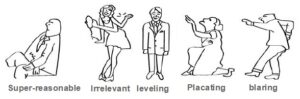
(Peoplemaking, 1972)
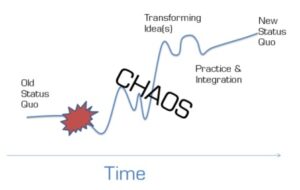
The Process of Change – the family from chaos to growth
Families come for therapy when pain and discomfort in their interactions drive them to seek change and often be ready to change. The process of change throws the family system into temporary chaos. Only when the system is unbalanced can the therapist begin the process of change. By helping the family go through the stage of chaos the therapist provides all the support necessary to bring the family into the stage of integration. During this stage the therapist helps the family system absorb new learning, new perceptions, new skills, new connections, and helps create a more fully functioning system that promotes high self-esteem. The family has an opportunity to practice and experience the new level of growth.
Methods and tools for Change
Satir has developed many exercises and treatment procedures to facilitate change in the family system. These techniques include direct instruction, use of family maps, family chronology, teaching family communication skills, use of sculpting, modelling, reframing, family reconstruction, family stress ballet, use of mandala, “parts” parties, simulating family members in role-playing scenario, use of metaphors, use of humor, and probably many additional techniques familiar to the general family therapist, such as listening skills, building rapport, communication skills, and homework assignments.
Satir recognized self-esteem as the foundation to creating a connection within one’s own deepest self. Self-esteem is important in order to have a sense of self-confidence and empowerment.
One of the basic assumptions in the Satir model is the holistic view of the SELF as multi-dimensional, presented the “self mandala” metaphor, which includes the eight different universal human resources related to being in the world:
physical, sensual, nutritional, intellectual, emotional, interactional, contextual and spiritual,
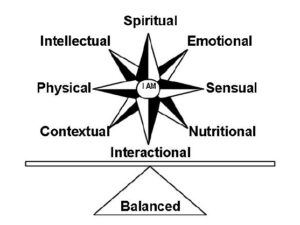
These eight areas of the “self mandala” are significant for creating and maintaining harmony within self and with other family members.
Satir focused on strengthening the resources of all family members as an important aspect of therapy by asking: “What strengths and resources have I gained from my own family of origin and can share with my current family?” To achieve this goal Satir developed the following process of Family Reconstruction.
Family reconstruction concept and process
Family reconstruction is one of Satir’s major and unique contributions to family therapy that integrate most of her different “change and healing” techniques. Family Reconstruction is an experiential process that aims to release and resolve profound tensions within and between people. It attempts to reveal a previously unrecognized systemic dynamic issues that are carried over from previous generations, and to resolve their deleterious effects in the client’s present life. The pain caused by childhood experiences and the negative way in which people perceive their parents can be alleviated by a broader view of the family dynamics over previous generations. Satir found the need to roll back the family history to include grandparents, therefore family reconstruction became a three-generational technique.
Family Reconstruction can enable participants to:
-
- Resolve misunderstandings, entanglements, and blocks in family-, partner- and other relationships;
- Uncover reasons for physical and emotional suffering and take steps towards healing (i.e., asthma, eating disorders, chronic headache or backache, depression, anxieties and phobias, suicidal tendencies, drug and alcohol abuse)
- Address parenting problems and painful family situations (i.e. divorce, single parenthood, miscarriage, infertility, abortion, adoption/custody)
- Deal positively with severe illness and death
Family reconstruction is a powerful psychodynamic process to update the past and
reduce the negative impact of early experiences. This experiential process results in freedom to make new choices and accept one’s self as well as others.
The Purpose this complex intervention is to reintegrate a person into the historical and psychological matrix of his/her family of origin as a way to change the negative impact of the past on the present. By inviting representatives of three generations such as parents and grandparents, the client/Star has a chance to discover his/her parents as real people, appreciate and connect with family roots, find missing pieces of the family history and get a better awareness of the forces that worked in the past and influenced his or her life.
Family reconstruction takes place in a group setting, when members are called to represent three generations of the “star’s” family. The process of uncovering family dynamics in front of others dmands a great deal of trust in the group and in the therapist.
Enactment of episodes from the client’s ancestors lives and seeing them in their historical contexts allows the “star” to meet his/her parents as real people, understand where they came from, what shaped their lives, what where their struggles, hopes and decisions that may have had an impact their child’s life. One developes a new and non-judgemental way of seing “self” and parents. This new perception becomes the key to freedom from old and destructive interactions and a chance to develop new and more effective ones.
Preparation fot the anactment includes a few steps:
- Creating trust in the group setting as a “safe place”.
- Therapist helps the client to make a seprate genogram, family map or family tree for mother’s family and father’s family. The genogram can be presented by using graphic symbols, family portraits or symbolic cards.
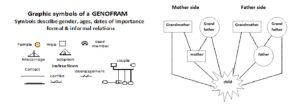
3. Each genogram include a full chronology of these families, stressing special event and family narratives.
- Parents, Maternal grandparents Paternal grandparents and siblings’ names, dates of marriages, birthess, adoption.
- Religious affiliations, ethnic backgrounds and history.
- Education, hobbies and special talents, occupations, acheivements and failures.
- Values of the family: religious, humanistic, political, altruism, gender values
- education, social, cultural
- Hidden secrets Connected with shame, guilt, fear or with breaking a social taboo
such as criminal records, suicide, rape, abortions, critical illness or disabilities,
betrials, divorce, homosexuality.
- Dates of important family events (moves, marriages, divorces, abortions, miscarriages, cot death, reunions, crises, traumas etc.) A key genogram factor is the issue of loss death – old or young, natural or violent, growing up an orphan
- economic ups & downs, job losses
- Dates of important historical events (wars, natural disasters, economic crisies).
For each parent:
- Three descriptive adjectives
- His/her primary communication pattern (as above)
- Family rules and role devision
- Family values and beliefs
- Family myths and secrets
- Dominant family theme
Gaps in the family chronogy are usually filled by guessing and imagination, which add to the the subjective and emotional process of ascribing meaning to the events.
Introductory Phase
- All the charts (maps, family chronology, wheel of influence) are hung on the walls for the group members to get aquainted with the Star’s family history.
- The therapist shares with the group a short summary Star’s life story and decides upon the crucial scenes that seems to have influenced the current issues in the therapy.
The therapist chooses a few episodes from the family chronology that seem to contribute to the client’s problem.
The therapist then asks the Star to choose representatives for the roles of the different family members, including oneself.
Family Reconstruction Process
- Sculpting the family of origin, while ascribing the typical “communication pattern” to each representative of the family members.
- Sculpting the families of origin of the Star’s mother and father.
- Enacting crucial events in the Star’s parents’ lives, such as meeting, courting, wedding, or any other omportant transitions. These psych-drama scenes bring to life crucial events and interactions that might have been hidden or mis-anderstood by the Star as a child. The Star has the freedom to change and re-direct the acting of the “family representatives” to make the reconstruction closer to reality. The representative can express their own feelings and reactions to the acted situation.
During this phase the Star gets the opportunity to observe for the first time event and interactions and observe in a non-judgemental way the parents as individuals – struggling and coping with their life’s demands. Missing parts are filled by the Star’s imagination. Thus the reconstruction provides a subjective, meaningful, personal family history.
Levels of possible change in the Star’s attitude:
- Release of feelings towards past events and meaningful people.
- Discover unknown segments of the family’s past history that may have affected event in the child’s life, and seeing them from an adult point of view.
- Accept the past without bitterness, regret or longing.
- Assume responsibily for one’s own behavior and change dysfunctional patterns carried over from the past.
Family Reconstruction as an experiential training for therapists
Satir believes that in order to help client family systems to heal, therapists must first heal and become whole within their own internal systems. The training therapists are encouraged to resolve hurts from their family of origin, which may still be having a negative impact on their present life. Satir encourages therapists to take responsibility to work through their own unresolved issues. Family reconstruction is one way to support therapists’ personal healing of their family of origin blockages. It teaches them to respond to their clients compassionately, non-judgmentally and truly hear what is behind the words and interactions of clients. Clients can be very sensitive to the therapeutic relationship and may sense if there are any biases, resistance, discomfort, unresponsiveness, or disrespect coming from therapists. Thus it is necessary for therapists to become aware of their own internal processes and not to allow judgment or reaction to affect their ability to be fully present with client.
Experiential reconstruction of a family in crisis:
Crisis is often a turning point in the family history. Parents take crucial decisions that may impact each and every family member, such as the decision to divorce, to immigrate or to adopt a child, for example. Looking back at such decisions that may have seemed quite inappropriate or hurtful at the time, the Star gains insight to the inner motivation of the parents and consequentially comes to terms with them.
A young trainee (the Star) complained that he had been psychologically neglected by his mother, who had delegated to his grandmother the tasks of caring for him in his childhood. His genogram included both maternal and paternal grandparents. The crisis situation happened when his mother, not yet 17, realized that she was pregnant. Both her family and her boyfriend’s family were greatly agitated.
Sculpting: The Star’s chose representatives for all family members on both sides and was guided by the therapist to sculpt the family of origin and ascribe each representative a typical “communication pattern”. The girl’s father assumed the “blamer” stance and suggested abortion. The boy’s “father” assumed the “super-reasonable” stance and suggested adoption. “Maternal grandmother” demanded immediate marriage. The representative for the pregnant girl assumed the “placating” stance and reported feelings of panic and bewilderment. The boy’s representative assumed a stance of “irrelevant” and indifferent. When the “sculpture” began to move, the “Stress Ballet” became highly chaotic.
Family reconstruction: the therapist offered to re-enact the scene of the baby’s birth. Watching the representatives of his parents at this crucial moment the Star realized for the first time the dynamics that led to his mother’s decisions. He witnessed his teen-age father’s coldness as a result of the imposed marriage. He saw his teen-age mother’s panic and despair at the birth of the unplanned baby. He then learned to appreciate his grandmother’s devotion in bringing him up while both his parents went back to high-school to resume their interrupted studies.
At this point the Star stepped in, confronted each of his parents (representatives) from a grown-up position, openly gave up his childhood resentment toward them and made peace with them and with his own history.
Closure: The Star got the opportunity to resculpt the family of origin in the new light, replacing judgements, blame, guilt and pain with compassion and understanding.
The therapist brought the Family Reconstruction to a close when the Star achieved a state of high self esteem, empowerment and positive attitude towards oneself and others.
Group experience: The players shared their own emotional experiences and associations. Non player group members shared their experiences as well.
Cross-cultural perspective
Family Reconstruction technique easily lends itself to cross-cultural work, as people connect on the basis of being similar and grow on the basis of being different. The idea of Family is universal, and so are inner dynamics of attachment and separation within the system. Culturally based structures, rules, roles, boundaries, values, expectations and ways of expression may differ from one culture to another, but also from one family to another within the same culture.
This method is open-ended in the sense that the Star can choose to portray his/her family within the historical and cultural setting while the therapist maintains an open and non-judgmental attitude throughout the process. It offers an opportunity to expand the therapist’s information and understanding of the impact of culture on family dynamics and consequently on the formation of the client’s problems and symptom.
A case of family Reconstruction in Japan
I conducted in 1984 at the Aoibashi Family Clinic in Kyoto what seemed to have been one of the first Family Therapy training in Japan. Armed with the Western concepts derived from the Satir Model, I set out to facilitate a Family Reconstruction training group for Japanese therapists. Following is a description of my initiation as an Israeli Therapist into “cultural diversity” of Japanese concepts regarding the Family, and the development of my own cultural sensitivity, while handing over the Satir Model to my trainees.
The Star was a 32 year old single woman-therapist who lived with her parents. Her request had to do with her understanding her difficulties in couple relations, which went sour time after time.
As the Star evolved her three-generation genogram and enriched it with her family narratives, the traditions, local cultural practices and beliefs emerged.
The most revealing tool of the cultural differences was the Genogram. It revealed the traditional Japanese family values of closeness, loyalty, obligation and respect.
In this tradition hierarchy is determined by age and gender: Parents are actively (if not solely) involved in their children’s marital choice, as marriage is considered an arrangement between two families more than a tie between the young couple as individuals.
The well established developmental concept of “separation-individuation” seems quite foreign in Japanese value system. Individuals are regarded more by their prescribed role in the family system than by their own needs and wishes. Thus until they wed, young adults live with their parents and extended family. After marriage the son brings his wife to the same setting. The woman is expected to sever her ties with her own family of origin and become part of the husband’ family and household, respect and obey her mother-in-law as well as her husband. Both abide by strict gender roles.
In the dramatic performance of the family reconstruction it became clear that the Star’s elderly parents were reluctant to separate from their only daughter, for fear of being left helplessly alone as they grew old. The role-play also revealed that the Star’s mother had carried unspoken resentment towards her mother in-law, who had dominated her, demanded her continuing services and frequently absorbed her husband’s attention.
When “mother” was given a voice – she gave a vivid description of Japanese traditional coping methods, where silent endurance of adversity was proof of strength of character, according to the Buddhist notion of avoiding conflict ad accepting reality without complaint.
Sculpting further uncovered unexpressed frustrations of women over three generations in the family, when the Star’s “grandmother”, who had been forced to marry beneath her social status, fell down on the floor, thus hinting at the unspoken secret of having committed suicide soon after giving birth to a daughter instead of to the more prestigious son.
In a culture where verbal emotional expression is considered “impolite” and secrets are kept hidden for fear of “losing face”, the Star gained insight of her position in a chain of silenced, self-effacing women. This insight has given her clue to how to maintain her individual freedom and pursue happiness in love and marriage in a culturally appropriate way, without having to neglect or betray her parents.
This example reinforces the value of Family reconstruction as a very efficient therapeutic tool in meeting the challenge of cultural diversity and using accepted culturally practices and values in affecting a beneficial change.
Satir Model and particularly Family Reconstruction lend themselves to adaptation to changing cultural norms, values and communication patterns. At the same time they provide a therapeutic flexible space for the therapist to learn, accept and respond to these differences.
Satir’s resources
- Satir V (2001). Self Esteem. Berkeley, CA: Celestial Arts..
- Satir V (1976). Making contact. Berkeley, CA: Celestial Arts.
- Satir V; Bandler R; Grinder J (1976). Changing with families. Palo Alto, CA: Science and
Behavior Books.
- Satir V (1978). Your many faces. Berkeley, CA: Celestial Arts.
- Satir V; Stachowiak J; Taschman HA (1994). Helping Families to Change. Northvale, N.J:
Jason Aronson. Satir V (1983). Conjoint family therapy. Palo Alto, CA: Science and
Behavior Books.
Satir V; Baldwin M (1983). Satir step by step: a guide to creating change in families. Palo
Alto, CA: Science and Behavior Books.
- Satir V (1988). The new peoplemaking. Palo Alto, CA: Science and Behavior Books.
- Satir V; Gomori M; Banmen J; Gerber JS (1991). The Satir model: family therapy and
beyond. Palo Alto, CA: Science and Behavior Books.
- Satir V (1972/1990 (reissue). Peoplemaking. CA:Souvenir Press Ltd.
References
- Ivey, A.E.& M.B., D’Andrea, M., Morgan, L.S. (2002). Family Counselling and Therapy
Theories of Counseling and Psychotherapy. Allyn and Bacon, Boston.
- McGoldrich, M.; Giordano, J. & Gracia-Preto, N. (Eds.) (2005). Ethnicity and Family
Therapy. New York: Guilford Press.